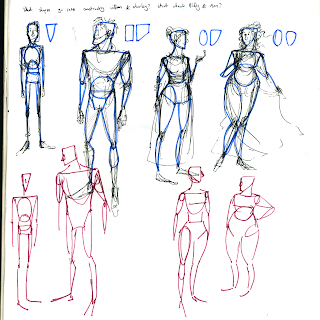
I just realised I haven’t got a blog post about the case study itself! That being the historical thing I’m investigating, and making my drawn experiments around - it’s William Shaw’s Bowes Academy, which he ran from 1814 to 1840.
This is a lightly trimmed and mildly edited version of the talk I gave to CDHAS in March 2020, with most of the illustrations, and with extra images!
 |
| Test drawings of Dickens, based on a few extant portraits. |
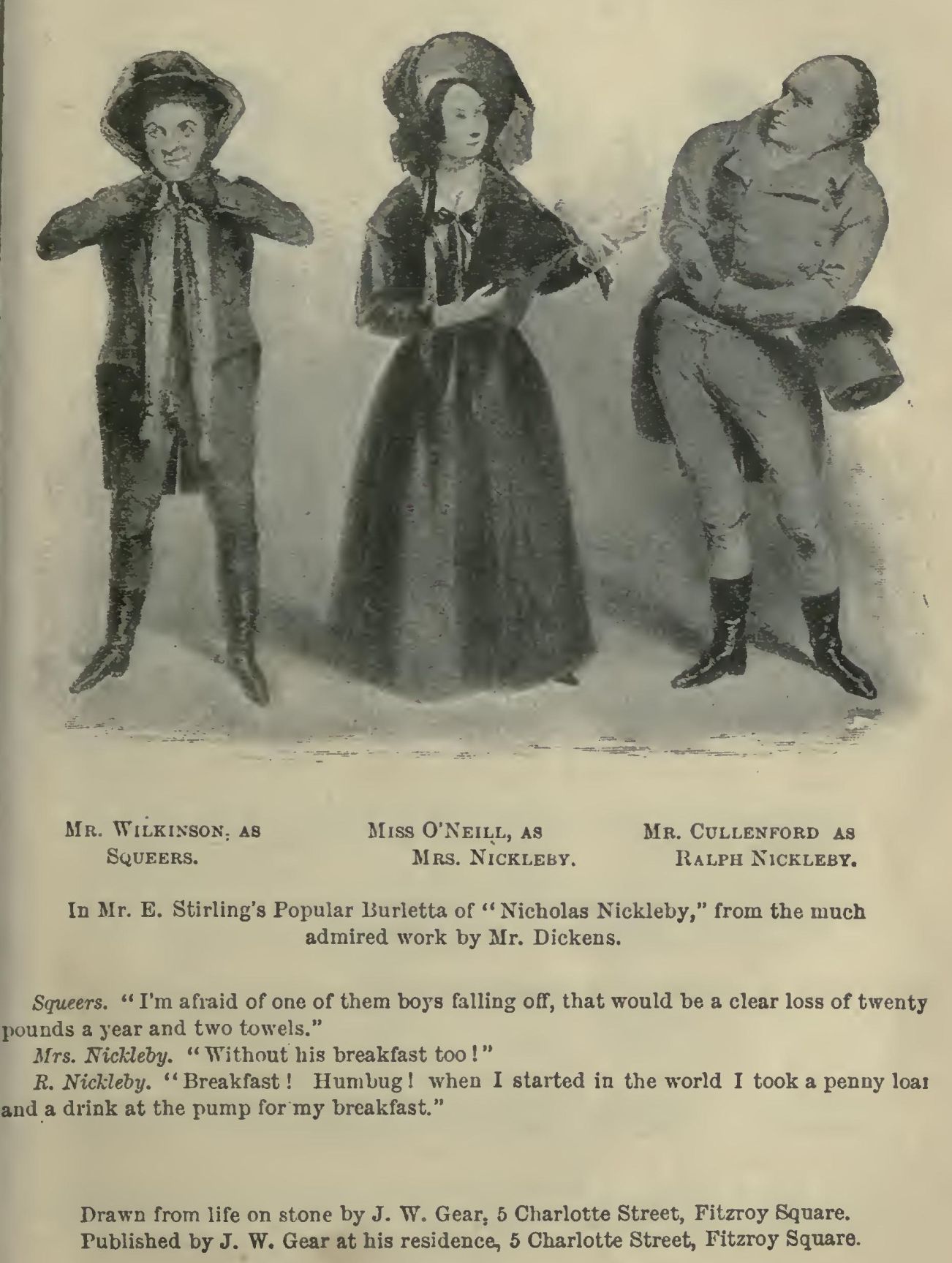
You’re heard of Charles Dickens, right? Have you read/ watched an adaptation of Nicholas Nickleby? Remember Dotheboys Hall, the dodgy boarding school run by villainous schoolmaster Wackford Squeers?
That fictional school was based on some actual schools. These ran from c. 1750 to c. 1850, with a few stragglers either end, mainly in Teesdale on the North Yorkshire/ County Durham border.
They advertised at middle-class parents, typically in London. The parents often had certain aspirations for their offspring, which are reflected in the classical and commercial curriculum offered by these schools. Classical subjects were what the upper classes taught their kids (stuff like Latin and Greek) while commercial ones would be all the things you'd need if you were going to go into a profession or become a merchant or something. This was usually stuff like book-keeping, maths, geography, sometimes French, that sort of thing. The youngest boys at these places were usually about six, but the top of the age range was 21 - once you’re 21, you’re legally an adult, and you’re responsible for yourself, and you can’t be kept anywhere.
(There were some schools for girls, but not many, and their subjects usually focussed on things that helped them run a household, were useful when entertaining, or looked cool at parties. A bit of reading, dancing, sewing, and so on - and sometimes drawing!)
Let’s imagine it’s the early nineteenth century, you’re a middle-class parent, you’ve got a son who needs an education, and you’re reading the Times. You spot this advert.

EDUCATION, by Mr. SHAW, and able ASSISTANTS, at BOWES ACADEMY, near Greta-bridge, Yorkshire. Youth are carefully instructed in the English, Latin, and Greek languages, writing, common and decimal arithmetic, bookkeeping, mensuration [measuring], &c., and are provided with board, clothes, and every necessary, at 20 guineas per annum each. No extra charges whatever. No vacations. N. B. The French language 2 guineas per annum extra. Further particulars may be known on application to Mr. Timberlake, 25, Great Marylebone-street; Mr. Annison, 10, Bedford-court, Covent-garden; and Mrs. Young, Plough-yard, Crown-street, Soho. Mr. Seaton, agent, 91, Whitecross-street, St. Luke’s, will give the most respectable reference to parents who have been at the above seminary since last July, seeing their sons. Mr. Shaw attends at the George and Blue Boar, High Holborn, from 12 to 2 o’clock daily, where cards of particulars may be had.
Fantastic! This is exactly the sort of thing you'd have been looking for. He seems sharp, professional, and to-the-point. This particular advert dates from January 1823, but it’s typical of Shaw’s adverts.
(In today’s money, 20 guineas is about £1200. As a nineteenth century person, you’d have heard of Greta Bridge because it’s on the Great North Road, one of the main coaching routes, and your letters would have gone through there if they were off to Scotland. “No vacations” isn’t as alarming as it sounds to us in the twenty-first century - people believed that holidays interrupted kids’ learning, as well as being a bit impractical with all the logistics of bringing them home from school and sending them back again in a few weeks.)
This is Bowes Academy, run by William Shaw from 1814 to 1840 - my case study. This is peak Yorkshire school: Shaw was active when the schools were at the height of their popularity, and his establishment was in the epicentre of the geographical area. His school is also one of the better documented establishments, and, at the height of his influence, had between 260 to 300 boys.

Shaw was born in 1782, allegedly in London, and his family may have originally been from Teesdale, but I haven’t been able to track them down yet - there’s quite a few William Shaws in the records. We don’t know anything about his early life.
Horatio Lloyd, one of Shaw’s old boys who attended in the early 1820s and grew up to become an actor, described the schoolmaster in his memoirs, published in the 1880s.
“A sharp, thin, upright little man, with a slight scale covering the pupil of one of the eyes. Yes. There he stands with his Wellington boots and short black trousers, not originally cut too short, but from a habit he had of sitting with one knee over the other, and the trousers being tight, they would get "ruck'd" half way up the boots. Then the clean white vest, swallow tailed black coat, white neck tie, silver-mounted spectacles, close cut iron-grey hair, high crowned hat worn slightly at the back of his head - and there you have the man.”
So here he is, in the inn, and it looks like some other parents and guardians have already left their kids with him. Let’s follow the schoolmaster, about 250 miles or so up the Great North Road to his establishment, and we’ll see what daily life might be like for them.
 |
| Comparison between an image of Bowes Academy from c. 1840, and one of my photographs of the place from 2015 (since lost due to iCloud deciding that it does what it wants). |
The boys got up in the morning, rolled out of bed, and were given an old quill pen - which they used for catching fleas. All you do is put the open end of the quill over a flea, which jumps up and gets trapped, and then all the quills are gathered up and burnt. The accommodation is a bit basic, but the establishment is very reasonably priced.
Next they went downstairs into the yard to wash at the pump. It was probably a bit of a scrum - there’s around 280 other lads wanting to wash, too. Then they would have dried themselves at one of two towels on rollers, but the bigger boys weren't very good at sharing, and snatched the dry part of the towel away from the younger ones.
 |
| The pump from imagined viewpoints, July 2018. |
Time for breakfast! It’s hasty pudding - the recipes I’ve found suggest that it was usually just flour and water, sometimes with a bit of salt or butter. Apparently a lot of oats were used at Shaw’s place, so I imagine some of those would have ended up in the mixture. I’ve tried the ultra-cheap flour-and-water version of it, and it’s not that bad.
Having looked at some contemporary teaching books, school would probably have begun with a collective prayer, and then the first lessons of the day. This may have been reading, probably followed by writing in copybooks.

Here’s what part of the schoolroom might have looked like. Shaw would have got the best desk - some of the contemporary teaching books recommend that the master’s desk goes on a podium. Here’s Charles Mackay, Shaw’s head usher - in today’s school, Shaw would be the headteacher, and the ushers would be equivalent to the ordinary teachers, so Mackay could have held a position similar to assistant head. He’s also teaching. Some of the other ushers were older boys, who will go into the profession and become schoolmasters themselves.
At dinner, the boys would usually have had meat and potatoes, but there was bread and milk on Thursdays, some sort of flour and water dumplings on Fridays, and something described by William Jones (remember that name) as “black potatoes with a bit of butter” on Saturdays. Once dinner was over, they probably back to lessons until teatime. The boys most often have brown bread, with watered-down milk. On Sunday, they had something called broth, but which the boys knew as pot-skimmings, and sometimes there were maggots in it. I told you it was cheap!

I’m not exactly sure what they’d have done in the evenings, but I’d imagine they would be encouraged towards more scholarly pursuits - contemporary authors of educational books seemed most impressed when kids spent their free time in reading or doing something else improving.
Then they were off to bed. Four or five of them slept in a bed - although Mackay swore there were never more than three in a bed, and, if he knew that there was, he’d have had them moved - and, in the middle of the dormitory, there was a big tub, which today would be referred to as a public convenience. William Jones said it was flowing all over the room.
 |
| Drawings from photographs I took on a trip to Barnard Castle, September 2019. |
Sometimes the boys would have enjoyed days off, and they’d have wandered across the moors, and Mr. Shaw would instruct them not to come back until sunset. Sometimes they smuggled food away from their meals, and saved it for a picnic later. When they wanted money, the boys would look for things to sell; sometimes they caught young jackdaws, trained them to speak, and then took them to Barnard Castle (the market town four miles up the road) to sell as pets.
Hold on a minute - how do we know so much about life at Shaw’s place? We’ve got a few sources, including quite a lot that show the establishment in a positive light, but one of the most valuable was the evidence given in a couple of trials involving William Shaw in 1823.

The first trial was brought against Shaw by the parents of William and Richard Jones. Young William had been seven when he and his then ten-year-old brother Richard first went to the Academy in 1819 - now it’s 1823, William is completely blind, and Richard can only see in strong light.
So what happened to them? The conditions at the Academy were basic, sanitation was unsanitary, food wasn’t quite up to scratch, and there was a fair bit of overcrowding. The place was an ideal breeding ground for ophthalmia.

Its full name back then was Egyptian ophthalmia, since it was allegedly brought back by soldiers returning from the Battle of the Nile in 1798, but it’s now known as trachoma. (That link is to the World Health Organisation; at the time of writing, it doesn't contain any graphic images.) Trachoma is highly contagious, particularly in crowded circumstances, such as in a school where everybody’s sharing beds and towels, and washing in standing water, and not receiving the best nutrition. The more you get infected, the higher your likelihood of losing your sight - which is exactly what happened to a few people at the Academy, including William Shaw himself. If we remember what Horatio Lloyd said earlier, Shaw had a slight scale over the pupil of one of his eyes - this is a result of the ophthalmia.
Interestingly, according to a medical journal of the time, commenting on the trials, there was an ophthalmia epidemic in the village of Bowes itself, but I’ve yet to track down more on that.
 |
| A couple of panels from the first page of Disorder. |
Head usher Charles Mackay gave evidence on Shaw’s behalf, and said he became aware that some of the boys had something wrong with their eyes in August 1820. In November, Henry Benning, the local apothecary and surgeon, was called in to look at the boys’ eyes, and was consulting until at least a year later.
 |
| Working out Sir William Adams' face (later known as Sir William Rawson) based on his portrait. |
In December 1820, William Jones had written home mentioning his eye trouble. Turns out that he was only one of several infected boys - in one of the rooms that another lad, James Saunders, was quarantined in, there were about fourteen or fifteen of them. This was 14 or 15 particularly bad cases out of approximately 280 - there will be other cases within the rest of the school population, but this is just over 5%.
In March 1821, the Jones brothers went home. Shortly after this, Sir William Adams - the most renowned eye doctor in the land, and the Surgeon and Oculist Extraordinary to none other than King George IV when he was Prince Regent - was called in. Shaw seemed willing to part with any amount of money in an attempt to sort out the problem. He could afford it - even if about 80% of the boys’ parents could afford to pay the 20 guineas fees, that’s over £4700; he also had properties throughout the village, and he was getting rent from these, and he also ran a farm.

At some point, according to Benning, Shaw’s life was despaired of - the stress of the situation had an impact on his health. (This is the incident that I explore in Disorder! Still trying to get the conclusion finished.)
In his defence, there is evidence that suggests Shaw personally tried to help the boys, or at least to cheer them up - not least because he lost an eye himself to the disease, which he could only have done if he’d have been infected multiple times, likely from contact with other victims. According to Lloyd, Shaw would sometimes play the flute for the entertainment of boys who were unwell. (I don’t know if Lloyd was there at the time of the epidemic because he’s very imprecise with his dating, but he did mention Shaw’s damaged eye.)
 |
| Screenshot featuring Benning, from the current draft of the introduction to Disorder. |
According to a couple of witnesses, the care shown by William and Bridget Shaw was practically parental. They tried to help, and they got one of the servants to constantly attend to the ill boys. Some years after the trial, Shaw actively invited parents to visit the school, showing that they had nothing to hide.
Even during the Jones brothers’ stay, the school was accepting visitors - admittedly, Shaw would come into the schoolroom and ask the boys who didn't have jackets or trousers (because they were being mended) to hide under the tables - but the conditions were not that exceptional for an early nineteenth century boarding school.

Back to the trial. The jury retired for half-an-hour, came back again, and declared that they’ve found Shaw guilty. The judge summed up, and the verdict was that Shaw had to pay £300 damages to the Joneses. (In today’s money, this is over £17000.)
The day after the Jones vs. Shaw trial, the schoolmaster was back in court - another family, the Ockerbys, brought an action against him for neglect, as three of their sons lost their sight under Shaw’s care. During the trial, Shaw had a brief word with his defence team, and pleaded guilty. The trial was over quite quickly, and the Ockerbys received £300.
 |
| Preliminary designs for Mrs. Ockerby and one of her offspring. |
All went quiet for a few years. I’m not sure to what extent the ophthalmia trials affected Shaw’s business, but he did not shut down - it’d take something much bigger than a trial reported in the newspapers to deter people from sending their kids to him. Some people were quite sympathetic towards him - the court, including the judge, all agreed that they’d learnt that he’d done his best with regards to the boys’ education, morals, clothes, and food - it’s just the healthcare that was slightly lacking.

However, at some point around 1830, relations between William Shaw and Charles Mackay broke down. Some sources suggest that Mackay chose to leave, while others say that Shaw fired him. We don’t really know exactly what happened.
Either way, he was out. Since he had the relevant teaching experience, he took off to Barnard Castle and set up a day-school for local kids. Some of them could even have been the offspring of boys he taught in the earlier days of his career! He taught here around 1838, when a Mr. Browne and his friend visited the area.
Mr. Browne was looking for details about local schools - he claimed to know a widow in London whose son required a reasonably priced education. Mr. Browne and his friend may have been particularly interested, for some reason, in more scandalous stories of horrors and such. Mr. Browne was not who he said he was.

Mr. Browne was, in fact, Charles Dickens. His friend was the real Mr. Browne - Hablot Knight Browne, the illustrator, better known as Phiz - and they were doing an undercover investigation. There was no widow, and no small boy - but there was an idea that Dickens had about exposing the purported horrors of the Yorkshire schools.
He’d heard all sorts of nasty things - there’s some tale about a child with an abscess that his schoolmaster tore open with an inky penknife, and the wound got infected and the boy died - now, that’s not true, and the boy in question actually operated on himself with the knife and the ink, and was called John Crosse Brooks and grew up to become the Vice President of the Society of Antiquaries, and died in 1897 - but Dickens had this idea that the Yorkshire schools are all pits of despair and he wanted to sort them out.
 |
| Working out Phiz's face based on extant images of him. |
He spoke to a few locals, including a solicitor who tried to change the subject every time the schools were mentioned, but then advised against sending any child to any schoolmaster - at least, that’s what Dickens said - to be honest, I’m not pleased about his research methods. All this undercover business would never get past the research ethics committee at my university.
At some point, Dickens and Phiz got to hear about William Shaw, and decided to pay him a visit, hoping to look round his school and get some ideas for this story that Dickens was cooking up. Shaw, however, had heard a rumour that there was an undercover journalist from London sniffing round. He didn't want to be dragged through the press like he was in 1823, and politely refused to allow them to see his school.
But Dickens and Phiz had seen enough. In March 1838, the first instalment of Nicholas Nickleby appeared, and the reading public was introduced to Wackford Squeers, villainous schoolmaster and proprietor of Dotheboys Hall. Here’s Wackford’s advert from Chapter 3:
"Education. — At Mr. Wackford Squeers's Academy, Dotheboys Hall, at the delightful village of Dotheboys, near Greta Bridge in Yorkshire. Youth are boarded, clothed, booked, furnished with pocket-money, provided with all necessaries, instructed in all languages, living and dead, mathematics, orthography, geometry, astronomy, trigonometry, the use of the globes, algebra, single stick (if required), writing, arithmetic, fortification, and every other branch of classical literature. Terms, twenty guineas per annum. No extras, no vacations, and diet unparalleled. Mr. Squeers is in town, and attends daily, from one till four, at the Saracen's Head, Snow Hill. N.B. An able assistant wanted. Annual salary £5. A Master of Arts would be preferred."
Here’s the first illustration featuring Wackford Squeers, and here’s how Dickens described him in Chapter 4 of Nickleby:

“Mr. Squeers's appearance was not prepossessing. He had but one eye, and the popular prejudice runs in favour of two. The eye he had was unquestionably useful, but decidedly not ornamental, being of a greenish grey, and in shape resembling the fanlight of a street door. The blank side of his face was much wrinkled and puckered up, which gave him a very sinister appearance, especially when he smiled, at which times his expression bordered closely on the villainous. His hair was very flat and shiny, save at the ends, where it was brushed stiffly up from a low protruding forehead, which assorted well with his harsh voice and coarse manner. He was about two or three and fifty, and a trifle below the middle size; he wore a white neckerchief with long ends, and a suit of scholastic black, but his coat sleeves being a great deal too long, and his trousers a great deal too short, he appeared ill at ease in his clothes, and as if he were in a perpetual state of astonishment at finding himself so respectable.”
 |
| Wacko is a horrid vicious fellow and I love drawing him. |
Wackford Squeers, what a name - familiar initials, W. S. - doesn’t he resemble somebody we know? There was only one schoolmaster in Yorkshire who had one eye, who wore all black, who was a bit short and peculiar. Ex-pupils saw this illustration in print-shop windows and saw an over-exaggerated Mr. Shaw, and parents (the same middle-class people who could afford to send their sons to schools in Yorkshire could also afford Dickens’ shilling-a-go instalments of his latest novel) thought they recognised him in the text. Even Phiz’s son, some years later, got confirmation from the illustrator himself that his depiction of Squeers was Shaw turned up to eleven.

Anyway, the fallout from the release of Nicholas Nickleby had a very bad impact on William Shaw and his family. The Yorkshire schools were gradually fading out of popularity, but to be publicly shredded by a popular author, intent on what he would call exposing injustices - that was it.
Parents demanded that their sons return home.
The Academy closed in 1840, some time between January and June.
Bridget Shaw died on November 4th 1840, apparently of a broken heart as a result of the closure of the school. She’d been married to William for nearly thirty years.
 |
| Headstone marking the grave of William (c. 1782 - 1850) and Bridget (1784 - 1840) and their son, another William, who I refer to as Will (1813 - 1837). |
So that’s the end of Shaw’s Academy. A version of William Shaw, and a version of his school, survive in popular culture. There’s a pervading perception of him as a monstrous Dickensian villain, but that discounts his complexity - indeed, seeing any historical person as one-sided, to caricature them as either all good or all evil, denies their humanity.
Any of the people I have introduced to you in this post - to be honest, they were all doing their best under the circumstances they found themselves in.
It’s easy to stand here in the twenty-first century and look at the consequences of their actions and pass judgement on them - we have the benefit of hindsight, and can say things like “Shaw should have done more for the boys with ophthalmia” - but it’s important to remember that they had no idea what would happen next. When we stand here and look at the past, we’re actually looking at some people’s futures. If somebody in a hundred years did it to us - “I'm from the future so I know better and you shouldn't have done that” - we wouldn’t like it.
That’s part of what I want to do - I want to remind people that the people we study in history are exactly that: people. Like us, they have their own lives and experiences. Some of these have been forgotten, but if we can bring even one or two hints of these experiences back, which I hope to do by drawing them, we enrich our understandings of them, and, by extension (and a lot of thinking), our understandings of ourselves.